
When it comes to cooking or baking, knowing the right temperature can make the difference between a culinary masterpiece and a kitchen disaster. Ever wondered what 200 degrees Celsius translates to in Fahrenheit? Spoiler alert: it’s not just a random number! Understanding this conversion can save your soufflé from collapsing and your roast from turning into a charred brick.
Understanding Celsius and Fahrenheit
Celsius and Fahrenheit are two common temperature scales. Both scales serve unique purposes and have different reference points.
The Celsius Scale
The Celsius scale centers on the freezing point of water at 0 degrees and its boiling point at 100 degrees under standard atmospheric conditions. This scale is widely used in scientific contexts and most countries around the world. Temperature readings align closely with weather forecasts and global climate discussions. The simplicity of the Celsius scale benefits many, especially in culinary settings where precision is essential. For instance, recipes often list temperatures in degrees Celsius, making it vital for cooks to understand conversions.
The Fahrenheit Scale
The Fahrenheit scale defines the freezing point of water at 32 degrees and the boiling point at 212 degrees. Primarily used in the United States, this scale reflects a historical context in temperature measurement. Many people prefer Fahrenheit for everyday weather reporting as it provides more detail in certain temperature ranges. For example, a temperature of 70 degrees Fahrenheit feels noticeably different than one at 80 degrees. Familiarity with this scale aids individuals in making quick assessments about the weather and home heating settings.
Converting Celsius to Fahrenheit
Understanding how to convert Celsius to Fahrenheit is essential in cooking and baking. Accurate conversions ensure culinary success and prevent common mishaps.
The Conversion Formula
To convert Celsius to Fahrenheit, use the formula: ( F = (C times 9/5) + 32 ). In this equation, ( F ) represents the Fahrenheit temperature, while ( C ) represents the temperature in Celsius. Multiplying by ( 9/5 ) adjusts the scale, and adding 32 shifts the zero point. This formula provides a clear method for transforming Celsius temperatures into Fahrenheit equivalents.
Step-by-Step Conversion of 200°C
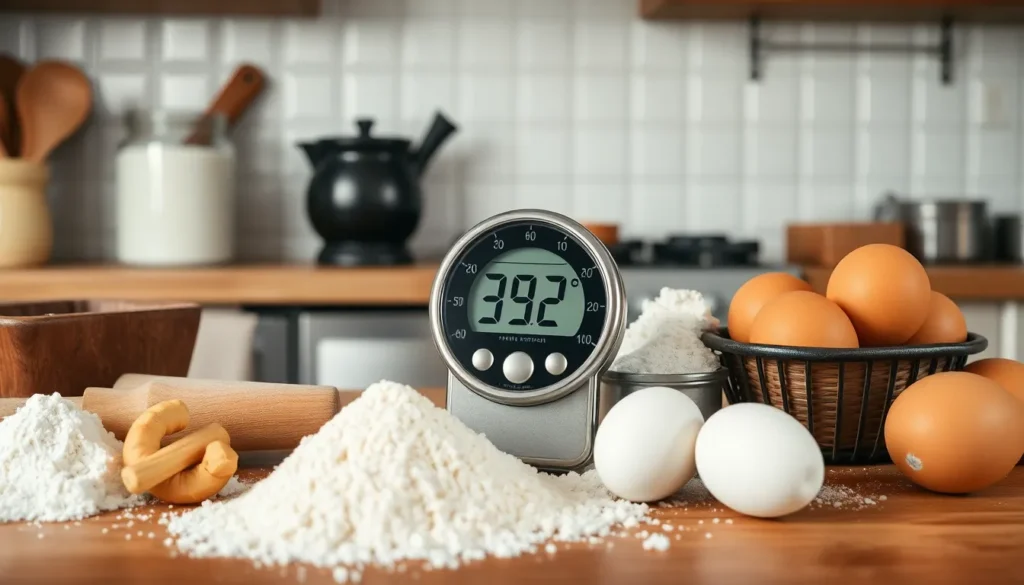
Begin the conversion process with 200 degrees Celsius. First, apply the formula by multiplying 200 by ( 9/5 ), which equals 360. Next, add 32 to the result. Thus, the final conversion yields 392 degrees Fahrenheit. Following these steps ensures a precise temperature conversion for any culinary task.
Practical Applications of Temperature Conversion
Accurate temperature conversions play a vital role in various fields, including cooking, baking, and weather forecasting. Understanding the correct conversions can enhance outcomes and improve decision-making.
Cooking and Baking
Precise temperature measurements in cooking and baking impact results significantly. Different recipes require specific temperature settings to achieve desired textures and flavors. For example, most baking recipes call for temperatures to be specified in Celsius or Fahrenheit. A shift from 200 degrees Celsius to 392 degrees Fahrenheit illustrates the necessity of understanding these conversions. Incorrect temperatures may result in undercooked or overcooked dishes, affecting overall quality. Knowing the conversion formula equips cooks with the tools to make necessary adjustments, ensuring culinary success and satisfaction.
Weather Forecasting
Temperature conversions are crucial for accurate weather forecasting. Meteorologists commonly report temperatures in Fahrenheit in the U.S., making awareness of Celsius-to-Fahrenheit conversions essential. Reliable forecasts enable informed decisions about clothing, activities, and travel plans. For instance, a weather alert indicating 200 degrees Celsius indicates a significant anomaly, translating to 392 degrees Fahrenheit. This knowledge allows individuals to understand extreme weather events and prepare accordingly. Mastering temperature conversions ensures readiness for any climate conditions.
Common Temperature Conversions
Understanding important temperature conversions can enhance various culinary and daily activities. Knowing key Celsius values can simplify cooking processes and other scenarios that require accurate temperature references.
Other Notable Celsius Temperatures
Significant Celsius temperatures include 0 degrees, which represents the freezing point of water, and 100 degrees, the boiling point. 25 degrees Celsius, commonly associated with room temperature, serves as a comfortable setting for many indoor environments. Additionally, 37 degrees Celsius is typical of the human body’s normal temperature. These reference points highlight common experiences that make Celsius comprehensible and useful.
Everyday Scenarios for Conversion
Everyday situations frequently illustrate the need for temperature conversions. Cooking often requires knowing the Fahrenheit equivalents for recipes designed for American kitchens. For example, a recipe calling for 180 degrees Celsius translates to 356 degrees Fahrenheit, crucial for optimal baking results. Weather forecasts also depend on these conversions. People checking temperatures for planning their outfits or outdoor activities benefit greatly from a clear understanding of Celsius to Fahrenheit transformations, ensuring they dress appropriately for the weather.
Mastering temperature conversions is vital for anyone who enjoys cooking or baking. Knowing that 200 degrees Celsius equals 392 degrees Fahrenheit can make a significant difference in achieving culinary perfection. Accurate temperature measurements not only enhance the quality of dishes but also prevent common kitchen mishaps.
Beyond the kitchen, these conversions play an essential role in everyday life, particularly in weather forecasting. By understanding both Celsius and Fahrenheit scales, individuals can make informed decisions about their daily activities. Embracing these conversions empowers cooks and everyday people alike to navigate temperature-related challenges with confidence.