Table of Contents
ToggleWalk-in showers are prized for their open, accessible design, but that openness can create problems. Water splashing onto bathroom floors, heat escaping mid-shower, and a lack of privacy are common complaints. Adding a shower curtain to a walk-in shower solves these issues without compromising the sleek, barrier-free aesthetic. Unlike traditional shower-tub combos, walk-in shower curtain installations require thoughtful planning around dimensions, rod placement, and material choice. This guide walks through everything needed to choose, install, and style shower curtains for walk-in showers, turning a practical necessity into a design feature that works as hard as it looks.
Key Takeaways
- A shower curtain for a walk-in shower solves water splashing, heat loss, and privacy issues while maintaining the open, accessible aesthetic without permanent modifications.
- Measure your shower opening width carefully and add 12 to 18 inches for overlap; mount the rod 75 to 78 inches above the floor for standard ceilings, with the curtain hanging at least 6 inches inside the shower pan.
- Polyester fabric resists mildew and dries faster than cotton, while waterproof options like PEVA work best for high-moisture environments, though they require ceiling-mounted rods rated for heavier loads.
- A ceiling-mounted or wall-mounted flanged rod screwed into studs provides better support than tension rods for wider openings or heavier vinyl curtains, with heavy-duty toggle bolts needed for drywall installation.
- Install a properly-sized ventilation fan (CFM = square footage × 1.1) that runs during and 20 minutes after each shower to extend curtain lifespan and prevent mildew growth.
- Bold patterns, color blocking, or layered designs with decorative outer curtains paired with waterproof liners transform a walk-in shower curtain from functional necessity into a bathroom design focal point.
Why Use a Shower Curtain in a Walk-In Shower?
Walk-in showers without doors or curtains look stunning in showrooms, but real-world use tells a different story. A shower curtain for a walk-in shower addresses three core problems:
Water containment. Even with a properly sloped floor (minimum 1/4-inch per foot pitch toward the drain, per IRC standards), spray from fixed or handheld showerheads can reach beyond the wet zone. Curtains create a flexible barrier that keeps water where it belongs, protecting grout, drywall, and flooring outside the shower pan.
Heat retention. Open showers lose warm air fast, especially in larger bathrooms or homes with forced-air HVAC. A curtain traps steam, keeping the shower comfortable without cranking the water heater. This matters more in colder climates or bathrooms with exterior walls.
Privacy and draft control. Not every household needs privacy inside a master bath, but guest bathrooms or shared spaces benefit from the option. Curtains also block drafts from bathroom vents or windows, which can make winter showers miserable.
Unlike glass doors, curtains are budget-friendly, reversible, and easy to swap out. No hinge hardware to corrode, no mineral buildup on tempered glass panels, and no professional installer required. For renters or anyone avoiding permanent modifications, a walk-in shower with shower curtain setup is the most flexible solution.
Choosing the Right Shower Curtain for Your Walk-In Shower
Size and Length Considerations
Standard 72-inch-wide by 72-inch-long curtains fit most bathtub-shower combos, but walk-in showers demand custom thinking. Measure the width of the shower opening at the curtain rod height, not at floor level, since walls may not be perfectly plumb. Add 12 to 18 inches to that measurement for adequate overlap and gathering. A 48-inch opening works with a 60- to 66-inch curtain: wider entries need 72-inch or even custom 84-inch widths.
Length depends on ceiling height and rod placement. For standard 8-foot ceilings, mount the rod 75 to 78 inches above the finished floor, leaving 2 to 3 inches of clearance below the curtain hem to prevent mildew while still blocking splashes. Taller ceilings or curbless showers may need 84-inch or 96-inch extra-long curtains to maintain proper coverage. The curtain should hang inside the shower pan or wet area by at least 6 inches to direct water toward the drain.
Curved or L-shaped walk-in showers require continuous curved rods or multi-section tension rods. Measure the entire curved span, then order a curtain 1.5 times that length to ensure enough fabric gathers around corners without pulling taut.
Material Options for Walk-In Shower Curtains
Polyester fabric is the workhorse choice. It resists mildew better than cotton, dries faster, and holds up under daily use. Look for polyester labeled machine-washable and treated with antimicrobial coatings. Avoid untreated cotton unless paired with a waterproof liner, cotton alone soaks up water and breeds mold in the humid environment of a walk-in shower.
Vinyl and PEVA (polyethylene vinyl acetate) are fully waterproof and low-cost, but they require a sturdier rod setup since they’re heavier when wet. PEVA is the safer pick, it’s PVC-free and doesn’t off-gas chlorine odors. Vinyl and PEVA curtains typically can’t go in the washing machine: plan to wipe them down monthly with a vinegar-water solution.
Waffle-weave or linen-blend curtains offer a spa-like aesthetic and work well in modern or minimalist bathrooms. These need a separate waterproof liner (clear PEVA or nylon) hung on interior rings to protect the decorative outer layer. The liner does the heavy lifting: the outer curtain is purely decorative and should be removed for laundering every few months.
For high-moisture environments, quick-dry mesh or hookless curtains reduce drying time and eliminate the need for rings. Mesh panels at the top allow steam to escape while keeping water contained below waist height, ideal for ventilation-challenged bathrooms.
Installation Tips for Walk-In Shower Curtains
Rod selection matters. Tension rods work for openings up to 72 inches, but anything wider or heavier (like vinyl curtains) needs a ceiling-mounted or wall-mounted flanged rod screwed into studs or blocking. Locate studs with a stud finder: if there’s no framing where you need it, install blocking between studs (this requires opening drywall, not a beginner move) or use heavy-duty drywall anchors rated for 50+ pounds. Bathroom drywall is often 1/2-inch moisture-resistant (greenboard or purple board), so standard plastic anchors won’t hold. Toggle bolts or snap toggles are the minimum.
For curbless or wet-room showers, mount the rod at least 6 inches outside the shower pan perimeter so the curtain drapes inside the wet zone. This prevents water from running down the outside face of the curtain onto dry flooring. If the rod is ceiling-mounted, use a curved or U-shaped track that follows the shower footprint.
Weighted hems or magnetic closures keep curtains in place. Sew-in magnetic strips (available at fabric stores) or detachable weighted chains prevent billowing and gaps at the floor. Some walk-in shower curtain ideas incorporate split or double curtains, two narrower panels on separate tracks, offering partial privacy and better airflow.
Install a ventilation fan if one isn’t already present. The 2018 IRC requires mechanical ventilation (exhaust fan or operable window) in bathrooms with showers. Proper ventilation extends curtain life by reducing humidity and mildew growth. A fan rated for the bathroom’s square footage (CFM = square footage × 1.1 for standard ceilings) should run during and 20 minutes after each shower.
Safety note: Wear safety glasses when drilling into tile or drilling overhead. Carbide-tipped masonry bits are required for ceramic or porcelain tile: standard twist bits will shatter the glaze. If unsure about structural modifications, especially in tile showers or older homes, consult a licensed contractor. Improper installation can crack tile or compromise waterproofing membranes.
Design Ideas to Elevate Your Walk-In Shower
Shower curtains for walk-in showers don’t have to look like an afterthought. Pairing a neutral waterproof liner with a bold outer curtain in geometric prints, wide stripes, or botanical patterns turns the curtain into a focal point. Design inspiration galleries showcase layered curtain setups where texture, like linen or waffle-weave, adds depth without clutter.
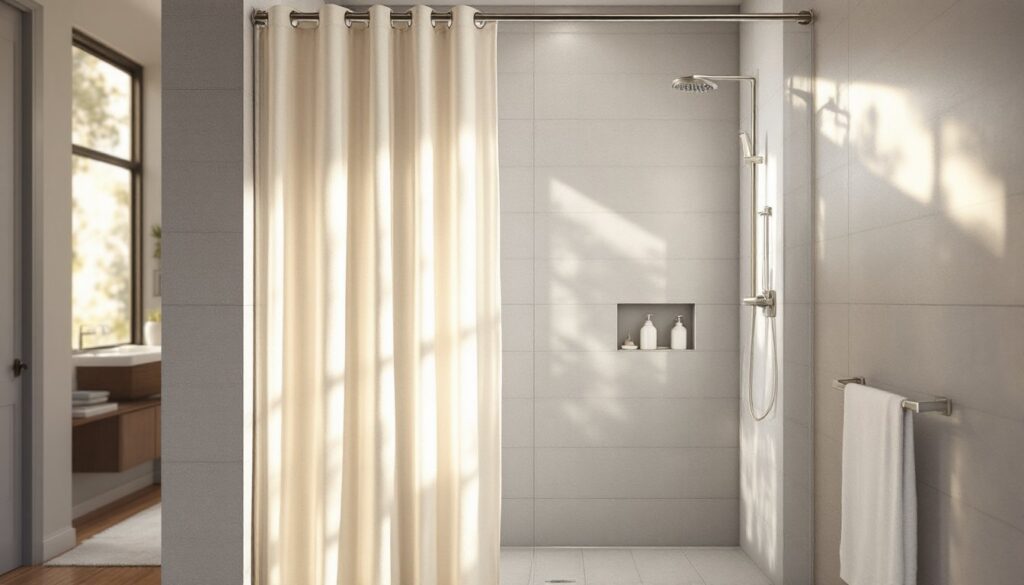
In minimalist or Scandinavian-style bathrooms, a single white or light gray curtain in a quick-dry fabric keeps sightlines clean. Mount the rod close to the ceiling (or use a ceiling-mounted track) to emphasize vertical space. Frameless or low-profile rods disappear visually, letting the curtain appear to float.
For industrial or loft aesthetics, matte black or brushed nickel rods paired with canvas or heavy cotton duck curtains deliver a utilitarian edge. Grommet-top curtains slide smoothly on these rods and handle frequent opening without sagging.
Color blocking works well in walk-in showers with shower curtains. Use a dark lower panel (navy, charcoal, forest green) to hide soap scum and a lighter upper section to reflect light. Some retailers sell curtains with contrasting top and bottom thirds specifically for this purpose.
If the walk-in shower opens into a small bathroom, a sheer or semi-transparent curtain maintains the open feel while still blocking splashes. Frosted PEVA or mesh panels let light pass through, preventing the space from feeling cramped. Curated product guides often feature high-end mesh curtains used in boutique hotel bathrooms, translucent enough to showcase tile work, opaque enough for function.
Custom curtains are an option for unusual dimensions. Many online fabricators will hem and grommet fabric to exact measurements. This route costs more than off-the-shelf options but solves fit issues in non-standard openings. For DIYers comfortable with a sewing machine, making a walk-in shower curtain from outdoor fabric (Sunbrella, solution-dyed acrylic) provides fade resistance and mildew protection.
Conclusion
A walk-in shower with curtain isn’t a compromise, it’s a practical upgrade that improves water control, comfort, and design flexibility. Measure carefully, choose materials that match the bathroom’s humidity level and aesthetic, and don’t skip proper ventilation. Whether installing a tension rod for a weekend refresh or mounting a ceiling track for a permanent solution, the right curtain setup turns an open shower into a contained, comfortable space that still feels light and accessible. Bathrooms benefit from updates that work, not just ones that look good in home improvement galleries, and a well-chosen shower curtain delivers both.