Table of Contents
ToggleAnts marching across patios, mounding in lawns, and infiltrating potted plants can turn outdoor spaces from relaxing to frustrating fast. Unlike indoor infestations, outdoor colonies are harder to spot and tougher to eliminate because they’re constantly foraging and establishing satellite nests. The good news? With the right outdoor ant killer and a strategic application approach, homeowners can knock back colonies and keep them from migrating indoors. This guide breaks down the most effective products, application methods, and alternatives to help DIYers reclaim their yards without guesswork or wasted time.
Key Takeaways
- Outdoor ant killer effectiveness depends on species and infestation type—fire ants respond best to granules, while carpenter ants require direct nest treatment and bait stations provide long-term colony elimination.
- Granular ant killers work within 7–14 days by forcing ants to carry insecticide back to the nest, but require moisture to activate and need pet-free zones for 24 hours after application.
- Bait stations exploit ant behavior by poisoning the queen and larvae, taking 2–6 weeks for full colony collapse but offering the most reliable long-term control without constant reapplication.
- Always treat outdoor ant infestations in early spring before colonies reproduce rapidly, locate nests by following foraging trails at dusk, and apply products directly to nest entrances for maximum impact.
- Natural alternatives like diatomaceous earth and boiling water work for small accessible nests but are slower and less effective than chemical treatments for large or established colonies.
- Create a 3–6 foot perimeter barrier around your home’s foundation after treating nests to intercept foraging ants before they infiltrate indoor spaces.
Why Ants Invade Your Outdoor Spaces
Ants don’t show up randomly, they’re following food, water, and shelter. Outdoor colonies thrive near moisture sources like irrigation lines, downspouts, or shaded mulch beds. They’re also attracted to sugary residue from outdoor dining, pet food left on decks, and aphid honeydew on plants.
Most species establish nests in soil, under pavers, or inside landscape timbers. Fire ants, common in the South, build visible mounds that can reach 18 inches across. Carpenter ants, found nationwide, nest in rotting wood and can compromise deck posts or fascia boards if left unchecked. Pavement ants squeeze into cracks along driveways and patios, creating unsightly sand piles.
Once a colony is established outdoors, scout ants forage up to 100 feet from the nest. If they find easy food or water inside your home, they’ll recruit others, and suddenly you’ve got an indoor problem. Treating outdoor colonies before they migrate is the most effective defense.
Understanding ant behavior is key: colonies reproduce rapidly in spring and early summer, so early intervention prevents exponential growth. Waiting until midsummer means battling established colonies with thousands of workers and multiple queens.
Types of Outdoor Ant Killers: Which One Works Best?
Choosing the right outdoor ant killer depends on the species, infestation size, and surrounding environment. Each product type has specific strengths and limitations.
Granular Ant Killers
Granular formulas are ideal for treating large areas like lawns, garden beds, and perimeter zones. They contain slow-acting insecticides (often bifenthrin or fipronil) that ants carry back to the nest, eventually killing the colony including the queen.
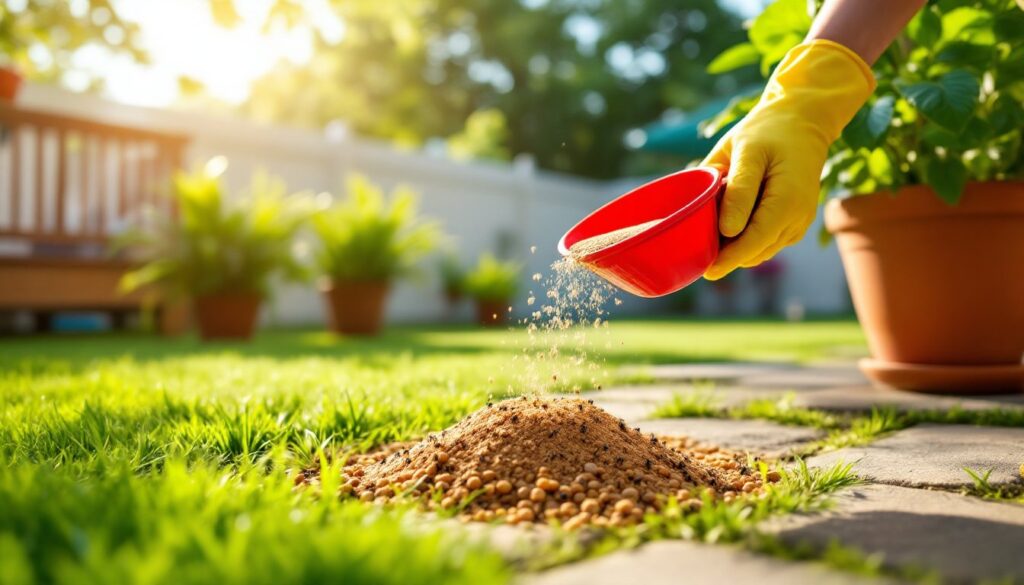
Application is straightforward: broadcast granules with a handheld or push spreader, then water lightly to activate. Coverage rates typically run 3–4 pounds per 1,000 square feet, but check the label, over-application wastes product and increases environmental exposure.
Granules work best on fire ants and pavement ants with visible mounds. They’re less effective for species nesting under hardscapes where granules can’t penetrate. Expect results in 7–14 days as the active ingredient cycles through the colony.
One downside: granules need moisture to activate, so they’re not ideal in drought conditions or areas with infrequent irrigation. They’re also not pet-safe until watered in and dried, so keep dogs and cats off treated areas for 24 hours.
Liquid Ant Sprays and Concentrates
Liquid sprays deliver fast knockdown, killing ants on contact and leaving a residual barrier that lasts 4–12 weeks depending on weather and UV exposure. Most concentrates (like those containing permethrin or lambda-cyhalothrin) require mixing with water in a pump sprayer or hose-end applicator.
Use liquids for targeted treatment: spray directly on trails, nest openings, and along foundation perimeters. For broader coverage, apply a 3- to 6-foot barrier around the home’s exterior, paying extra attention to cracks in concrete, gaps around utility penetrations, and areas where siding meets soil.
Liquid formulas excel at immediate control and are versatile enough for spot treatment or perimeter defense. But, they require reapplication after heavy rain and won’t eliminate deep colonies unless the active ingredient is carried back by foraging workers.
Always wear nitrile gloves and eye protection when mixing concentrates, and avoid spraying on windy days to prevent drift onto desirable plants or water features. The best ant killers often combine fast contact kill with residual protection.
Bait Stations for Long-Term Control
Bait stations are the most effective long-term solution because they exploit ant biology. Worker ants carry poisoned bait (usually borax or hydramethylnon mixed with sugar or protein attractants) back to the nest, feeding it to larvae and the queen. This slow kill ensures the entire colony is eliminated, not just foraging workers.
Place stations along active trails, near nest entrances, and around outdoor structures. Most products recommend spacing stations 10–20 feet apart for perimeter defense or closer for heavy infestations. Bait stations are weatherproof and tamper-resistant, making them safer around kids and pets than open granules or sprays.
Patience is critical: colonies may take 2–6 weeks to collapse as the toxin circulates. Don’t disturb stations or spray nearby with repellent insecticides, which can interfere with foraging behavior.
Bait stations work well for sugar-feeding ants like Argentine ants and odorous house ants, but less so for protein-preferring species like carpenter ants (though some baits offer dual attractants). They’re also ineffective against species that don’t recruit heavily to food sources.
How to Apply Outdoor Ant Killer Effectively
Even the best product fails without proper application. Here’s how to maximize effectiveness and avoid common mistakes.
1. Identify the species. Not all ants respond to the same treatment. Fire ants require mound drenches or granules, while carpenter ants need direct nest treatment. If you’re unsure, capture a few ants in a sealed bag and compare them to online identification guides or take them to a local extension office.
2. Locate the nests. Follow foraging trails back to the source, typically during late afternoon or early evening when ants are most active. Look for disturbed soil, wood shavings (carpenter ants), or entry points along foundations.
3. Treat the nest directly whenever possible. Broadcast treatments help, but nothing beats direct application. For mound-building species, use a granular or liquid drench per label instructions. For nests under pavers or in walls, inject liquid insecticide or apply gel bait at entry points.
4. Create a perimeter barrier. After treating nests, apply a liquid or granular barrier 3–6 feet wide around the home’s foundation, extending the treatment into mulch beds and along hardscape edges. This intercepts foragers before they reach the house.
5. Time your application. Treat in early morning or late evening when ants are near the nest and temperatures are cooler (below 85°F). Avoid treating just before rain, which can wash away products before they’re effective.
6. Follow label rates precisely. More isn’t better, over-application wastes money and increases environmental impact. Use a calibrated spreader for granules and measure concentrates accurately with a graduated container.
7. Reapply as needed. Most products require reapplication every 4–12 weeks, or after heavy rain. Monitor for new activity and retreat problem areas.
Safety note: Always wear gloves, long sleeves, and closed-toe shoes when applying chemical ant killers. Keep children and pets off treated areas until products have dried or been watered in as directed. For large infestations near wells, storm drains, or sensitive habitats, consult a licensed pest control professional to ensure compliance with local regulations.
Natural and Pet-Safe Alternatives to Chemical Ant Killers
For homeowners concerned about synthetic pesticides, several natural options provide moderate control, though they typically require more frequent application and won’t eliminate large colonies as effectively as chemical treatments.
Diatomaceous earth (DE) is a powdered sedimentary rock that physically damages ant exoskeletons, causing dehydration. Apply food-grade DE in a thin layer around nest openings, along trails, and in cracks. It’s non-toxic to mammals but loses effectiveness when wet, so reapply after rain. Wear a dust mask during application to avoid inhaling fine particles.
Boiling water is the simplest method for small, accessible nests. Pour 2–3 gallons directly into the nest entrance, ideally in early morning when most ants are inside. This won’t reach deep or sprawling colonies, but it’s effective for shallow nests in lawns or garden beds.
Borax-based homemade baits combine 1 part borax with 3 parts powdered sugar mixed into a paste with water. Place small amounts on cardboard near trails, replacing every few days. Worker ants carry the bait back, and the borax disrupts their digestive systems. This method works but is slower than commercial baits and less weatherproof.
Essential oil sprays, peppermint, tea tree, or citrus oils diluted in water, act as repellents but don’t kill colonies. They can disrupt trails temporarily and may help keep ants away from specific areas like patios or doorways. Expect to reapply every few days.
Vinegar solutions (1:1 white vinegar and water) work similarly to essential oils: they mask scent trails but don’t eliminate nests. Use them for spot cleaning after removing food sources, not as a standalone treatment.
For comprehensive home maintenance checklists that include pest prevention strategies, many homeowners find that combining natural deterrents with habitat modification, removing wood debris, fixing leaks, and trimming vegetation away from foundations, provides the best long-term results without heavy chemical reliance. But for serious infestations, especially with aggressive species like fire ants or structural threats like carpenter ants, chemical intervention is often necessary. Balance your approach based on the severity of the problem and your household’s specific needs.