Table of Contents
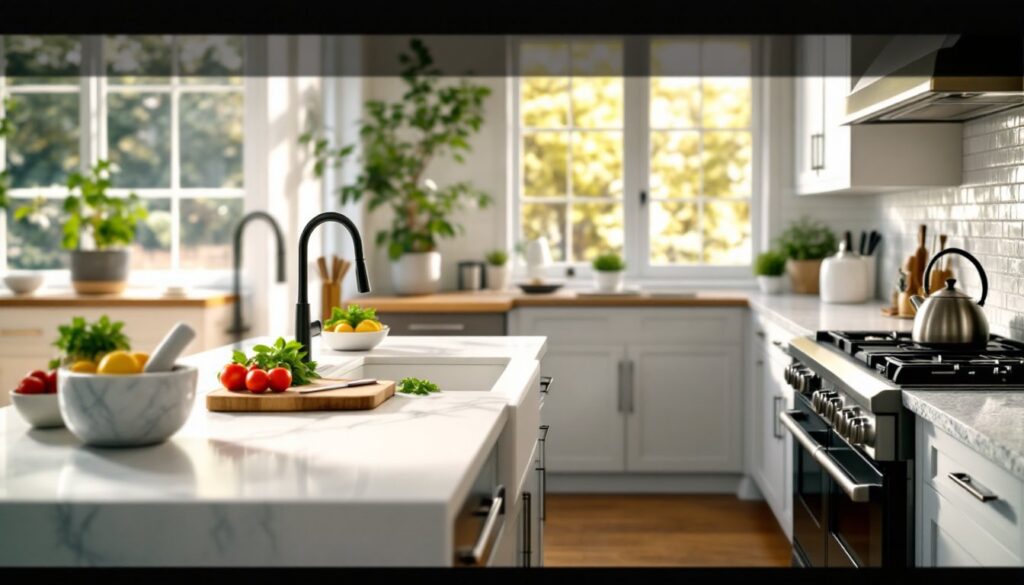
ToggleChoosing the right countertop transforms a kitchen from functional to phenomenal. It’s the surface that bears the brunt of meal prep, hot pots, spills, and daily wear, while anchoring your kitchen’s entire aesthetic. Whether you’re planning a full renovation or a targeted upgrade, the countertop sets the tone for style, durability, and budget. With materials ranging from time-tested stone to cutting-edge composites, homeowners have more countertop ideas than ever. This guide breaks down the best options across price points, performance, and design trends shaping kitchens in 2026.
Key Takeaways
- Quartz and engineered stone dominate 2026 kitchen trends, offering stain resistance and zero-maintenance solutions without the sealing requirements of natural stone countertops.
- Kitchen countertop ideas range from budget-friendly laminate and tile options ($10–$40 per sq. ft.) to premium materials like porcelain slabs and live-edge wood ($60–$300+ per sq. ft.).
- Natural stone countertops like granite are heat-resistant and durable but require professional installation and regular sealing, while softer alternatives like soapstone and butcher block develop attractive patina over time.
- Trending finishes include waterfall edges on islands, matte or leathered surfaces that hide fingerprints, and terrazzo-inspired designs with recycled glass or metal flecks.
- Select countertop materials based on cooking habits: quartz or porcelain for busy families, concrete or live-edge wood for design-forward spaces, and always prioritize proper substrate preparation and professional installation.
Classic Countertop Materials That Stand the Test of Time
Granite and Marble Countertops
Granite remains the workhorse of natural stone countertops, and for good reason. Each slab is unique, cut from igneous rock with patterns ranging from tight speckles to dramatic veining. Granite slabs typically measure 3 cm thick (about 1.18 inches actual) and require professional fabrication and installation due to their weight, expect around 18 pounds per square foot. The material resists heat up to 1,200°F, handles knife slips without scratching, and when properly sealed (annually or biannually depending on porosity), shrugs off most stains.
Marble countertops bring a softer, more elegant aesthetic but demand more care. Carrara, Calacatta, and Statuario varieties showcase those signature gray or gold veins on white backgrounds. Marble is calcium carbonate, which means it’s vulnerable to acidic substances, lemon juice, vinegar, and even tomato sauce can etch the surface. Plan to reseal marble every 6–12 months and embrace the patina that develops over time. Many homeowners love the lived-in character: others find it frustrating. If you’re meticulous about wiping spills immediately and using cutting boards religiously, marble delivers unmatched sophistication.
Both materials require a plywood or cementboard substrate over your cabinet boxes, typically ¾-inch thickness, to distribute weight evenly. Factor in edge profiles, bullnose, ogee, or beveled edges add cost but also visual interest. Installation is not a DIY job unless you have experience with heavy stone, proper lifting equipment, and diamond blade tools.
Budget-Friendly Countertop Options for Every Home
Laminate countertops have come a long way from the dated patterns of decades past. Modern high-pressure laminates mimic stone, wood, and concrete with surprising realism. Brands like Formica and Wilsonart offer textured finishes that add depth. Laminate installs over particleboard or MDF substrate, comes in post-form (pre-molded with integrated backsplash) or custom-cut sheets, and costs roughly $10–$40 per square foot installed. It’s lightweight enough for a confident DIYer to handle with a circular saw fitted with a fine-tooth blade, contact cement, and a J-roller. The downside: laminate can’t handle hot pans directly (use trivets), and once the surface chips or delaminates, repair is tough.
Butcher block countertops bring warmth and a workable surface at $30–$70 per square foot. Hard maple is the standard, though walnut, cherry, and oak are popular upgrades. Blocks come in edge-grain (strips laid horizontally) or end-grain (checkerboard pattern), end-grain is gentler on knives but pricier. Butcher block requires periodic oiling with food-safe mineral oil or a beeswax blend to prevent drying and cracking. It’s DIY-friendly to install: screw up through cabinet corner braces into the underside, leaving slight expansion gaps at walls. Expect minor dents and cuts over time, but those sand out easily with 120-grit paper.
Tile countertops offer another budget route, especially if you’re comfortable with thin-set mortar and grout. Ceramic or porcelain tiles range from $2–$15 per square foot (material only). Larger-format tiles (12×24 inches or bigger) minimize grout lines, which are the main maintenance headache, grout stains and requires resealing. Use a cementboard underlayment, not plywood, to prevent flexing that cracks grout. Epoxy grout costs more but resists stains better than traditional sanded grout.
Trending Countertop Styles and Finishes for Modern Kitchens
Quartz and Engineered Stone Innovations
Quartz dominates the 2026 countertop market, blending aesthetics with near-zero maintenance. Engineered stone combines roughly 90–95% ground natural quartz with polymer resins and pigments, resulting in slabs that are non-porous, stain-resistant, and uniform in pattern. Unlike granite, quartz doesn’t require sealing, ever. It handles everyday kitchen abuse (wine spills, coffee rings, grease splatters) without flinching.
Manufacturers have expanded palettes beyond solid whites and grays. Expect to veined patterns mimicking Calacatta marble, terrazzo-inspired speckles with recycled glass or metal flecks, and even matte or leathered finishes that hide fingerprints better than polished surfaces. Cambria, Caesarstone, and Silestone lead innovation here, with some lines incorporating antimicrobial additives or higher recycled content for eco-conscious buyers.
Installation mirrors granite: professional fabrication, heavy slabs (about 15 pounds per square foot at 2 cm thickness, 20 pounds at 3 cm), and a stable substrate. Quartz costs $50–$150 per square foot installed, depending on brand and complexity. The one caution: quartz can discolor or crack if exposed to extreme heat, always use trivets or hot pads, especially near cooktops. It’s also not UV-stable, so outdoor kitchen countertops should use granite or porcelain instead.
Beyond quartz, waterfall edges continue trending, where the countertop material extends vertically down the side of an island or peninsula, creating a continuous “waterfall” effect. This detail works best with bold-veined materials and adds roughly $500–$1,500 in fabrication costs due to the extra material and mitered seams.
Durable and Low-Maintenance Countertop Choices
Solid surface countertops (think Corian, HI-MACS, or Staron) are nonporous acrylic or polyester composites molded into seamless installations. Scratches and minor burns sand out with fine abrasive pads, making this material essentially renewable. Solid surface costs $35–$85 per square foot installed and comes in hundreds of colors, including translucent options that backlight beautifully. Because it’s thermoformable, fabricators can create integrated sinks, coved backsplashes, and curves impossible with stone. Installation requires certified fabricators due to specialized adhesives and seaming techniques, but repairs are straightforward for professionals.
Porcelain slab countertops are gaining traction among those seeking minimalist, sustainable options. These large-format slabs (often 5×10 feet or bigger) are made from fired clay and minerals, resulting in surfaces that resist heat (up to 2,000°F), scratches, UV rays, and stains. Porcelain is harder than granite, non-porous, and available in finishes mimicking marble, concrete, or wood. At 6–12 mm thick, slabs are lighter than stone but just as rigid, requiring careful handling during install. Expect $60–$120 per square foot installed. The learning curve for cutting and fabricating porcelain is steep, diamond blades and wet saws are mandatory, and chipping is a risk at edges. This is decidedly a pro install, but once in place, porcelain countertops need no sealing or special cleaners.
Stainless steel countertops suit industrial or modern kitchens and are the ultimate low-maintenance choice. Commercial-grade 16-gauge stainless (Type 304 or 316) resists heat, bacteria, and stains. Scratches develop a patina over time, some love it, some hate it. Custom fabricators weld seams, integrate sinks, and form edges to your specs, with costs around $75–$150 per square foot. For a DIY-friendly version, consider stainless steel overlay sheets adhered to existing counters, though seams and edges won’t be as clean.
Unique and Statement-Making Countertop Materials
Concrete countertops let homeowners customize color, texture, and embedded objects (glass fragments, stones, metal inlays). Concrete is cast in place or poured into molds off-site, then polished and sealed. Finished thickness typically ranges from 1.5 to 2.5 inches. Concrete handles heat well but can crack if the substrate shifts or if the mix isn’t properly reinforced with rebar or wire mesh. Sealing is critical, use a food-safe penetrating sealer followed by a topical wax, reapplying every few months. DIYers with concrete experience can tackle this, but expect a learning curve on troweling, vibrating out air bubbles, and polishing. Costs run $65–$135 per square foot for professional work, less if you DIY. The aesthetic payoff is high: no two concrete countertops look identical.
Soapstone countertops offer a matte, almost velvety surface in shades of gray, green, or blue-black. Soapstone is softer than granite (composed mainly of talc), so it scratches more easily, but those scratches blend in or rub out with mineral oil. It’s naturally nonporous, never needs sealing, and is heat-proof. Over time, soapstone darkens or “patinas,” which many homeowners find appealing. Slabs cost $70–$120 per square foot installed and require the same professional fabrication as granite. Because it’s softer, cutting and shaping are easier, but also more prone to chipping during transport.
Recycled glass countertops combine glass shards (often from post-consumer bottles) with cement or resin binders, creating colorful, terrazzo-like surfaces. Brands like Vetrazzo and IceStone pioneered this category. The material is durable, nonporous (if resin-based), and available in vibrant or subtle palettes. Costs hover around $60–$100 per square foot. Installation and care mirror quartz, professional fabrication, no sealing needed for resin binders, but cement-based versions may require occasional sealing similar to concrete. These countertops make a strong sustainability statement and serve as instant conversation starters.
Wood countertops beyond butcher block, think live-edge slabs of walnut, cherry, or reclaimed timber, bring organic, one-of-a-kind character. Live-edge countertops retain the tree’s natural contour on one or both edges, often supported by metal brackets or inset into cabinetry. These require the same oiling as butcher block and won’t hold up as work surfaces near sinks (unless epoxy-sealed), but as bar tops, islands, or accent sections, they’re stunning. Expect $100–$300+ per square foot for premium hardwoods and custom milling. Make sure the slab is kiln-dried to below 10% moisture content to prevent warping, and allow it to acclimate in your home for at least a week before install.
For homeowners exploring broader updates, these countertop ideas pair well with other home renovation approaches that balance style and function. Prioritize your cooking habits, budget, and willingness to maintain the surface. A busy family kitchen thrives with quartz or porcelain: a design-forward space shines with concrete or live-edge wood. Whatever you choose, proper substrate prep, accurate measurements, and realistic timelines separate successful installs from costly do-overs. When in doubt, consult a certified fabricator, countertops are too central to kitchen function to gamble on guesswork.