Table of Contents
ToggleCoastal wall decor doesn’t require a beachfront address. Whether you live five miles or five hundred miles from the ocean, the right wall treatments can bring that breezy, sun-bleached aesthetic into any room. It’s less about literal seashells glued to everything and more about understanding the materials, colors, and textures that evoke the coast without turning your living room into a souvenir shop. Done right, coastal decor feels collected rather than themed, layered rather than literal. This guide covers the practical side, what works, what doesn’t, and how to execute it without a decorator’s budget.
Key Takeaways
- Coastal wall decor creates a calming aesthetic through neutral colors, natural textures, and muted blues—no beachfront address required.
- Essential coastal wall design relies on a palette of whites, soft grays, sandy beiges, and muted blues paired with natural materials like shiplap, reclaimed wood, and rope for texture and depth.
- DIY coastal wall decor projects like rope-wrapped frames, driftwood wall hangings, and painted oars are achievable in under an hour and add authentic character without requiring professional installation.
- When choosing coastal wall art, scale and subtle sophistication matter more than literal beach scenes—opt for abstract ocean textures, aerial photography, or botanical prints that complement rather than match your wall color.
- Bathrooms and kitchens suit functional coastal elements like rope-framed mirrors and open shelving with nautical accents, but moisture-resistant materials and sealed wood finishes are essential in humid environments.
What Makes Coastal Wall Decor So Popular?
Coastal aesthetics tap into a near-universal sense of calm. Light-filled spaces, natural materials, and a muted color palette reduce visual clutter, which most homeowners crave after years of maximalist trends. The style also adapts well to varying budgets and skill levels, you can achieve the look with driftwood found on a weekend trip or commission custom nautical charts.
Another draw: coastal decor ages gracefully. Unlike trendy accent walls that date quickly, beach wall decor built around neutral tones and natural textures remains relevant through design cycles. It’s forgiving, too. Minor wear on a painted wood plank wall or a sun-faded canvas print reads as patina rather than damage, which makes it ideal for high-traffic homes or rentals where walls take a beating.
The style also scales across home types. A Cape Cod cottage and a desert ranch can both pull off coastal elements because the core principles, light, texture, simplicity, translate to various architectural contexts. You’re not locked into one narrow interpretation.
Essential Elements of Coastal Wall Design
Color Palettes That Capture the Ocean Vibe
Coastal palettes center on whites, soft grays, sandy beiges, and muted blues. Pure white (not cream) works well for primary walls: it reflects natural light and makes rooms feel larger. For accent walls or built-in shelving, consider Benjamin Moore’s Palladian Blue (HC-144) or Sherwin-Williams’ Sea Salt (SW 6204), both read blue-green in natural light but shift neutral under artificial lighting.
Avoid vivid turquoise or primary blues unless you’re going full nautical theme (which veers into kitsch fast). Instead, layer multiple shades within the same tonal family. Pair a pale sky blue with driftwood gray and warm sand tones. The variation creates depth without breaking the calming effect.
Trim and ceiling treatments matter. Bright white trim (SW High Reflective White or BM Chantilly Lace) against soft blue-gray walls sharpens the contrast and mimics how sunlight hits coastal architecture. If you’re repainting, use satin or eggshell finishes on walls: they’re easier to clean than flat paint and hold up better in humid climates where coastal homes often sit.
Natural Textures and Materials
Texture does the heavy lifting in coastal design. Smooth painted drywall alone feels flat: adding wood, rope, woven fibers, or textured plaster introduces dimension.
Shiplap and tongue-and-groove planks remain popular, but installation varies. Nominal 1×6 pine boards (actual size: 3/4″ x 5.5″) are the most common choice. Install horizontally with a nickel-gap spacing using a nickel as a literal spacer between boards. Attach directly to studs with 18-gauge brad nails or construction adhesive if going over existing drywall. Paint before or after installation, priming beforehand saves time, but painting after installation hides nail holes better.
Reclaimed wood adds authenticity but requires prep. Check for nails, screws, or metal fragments with a metal detector before cutting. Plane or sand rough surfaces to avoid splinters, and apply a clear matte sealer (like Minwax Polycrylic) to prevent shedding and make dusting easier. Mount with Z-clips or French cleats for heavy pieces: drywall anchors alone won’t support weathered barn boards.
Rope and jute work for smaller accents, wrapped mirror frames, DIY wall hangings, or as trim on canvas art. Use 3/8″ to 1/2″ diameter natural jute rope for most projects: anything thinner looks flimsy, anything thicker overwhelms the frame. Secure with hot glue or marine-grade adhesive (like 3M 5200) if the piece will live in a bathroom where humidity is high.
Woven baskets, rattan mirrors, and driftwood pieces introduce organic shapes that break up straight lines. Hang baskets in odd-numbered groupings (three or five) for visual balance. Use 50 lb. picture-hanging wire and mount to studs or toggle anchors rated for the combined weight.
Best Coastal Wall Decor Ideas for Every Room
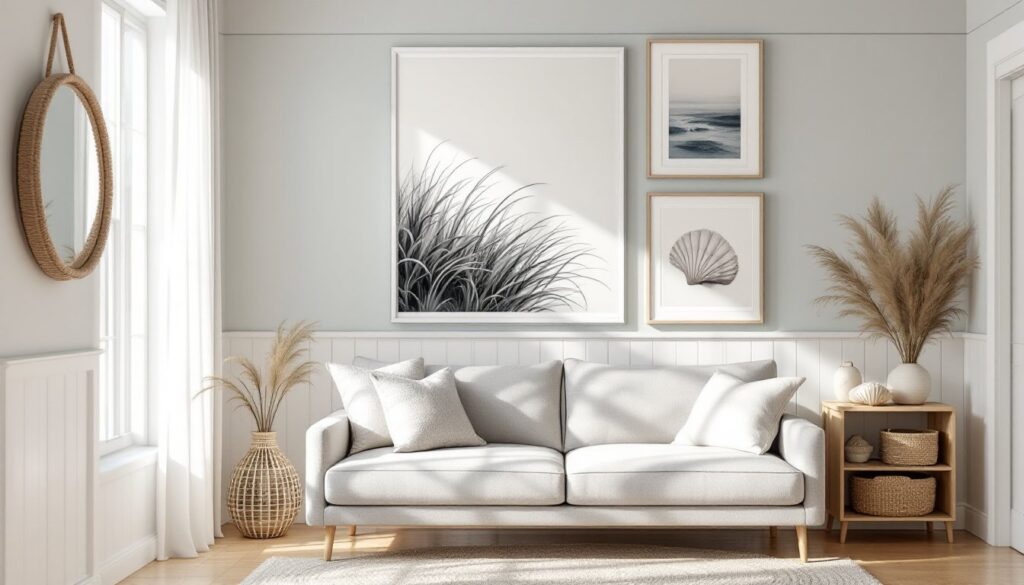
Living rooms benefit from large-scale art or gallery walls. Oversized black-and-white coastal photography (waves, piers, beach grasses) grounds the space without competing with furniture. Frame with simple white or natural wood frames, nothing ornate. If building a gallery wall, lay the arrangement on the floor first and photograph it. Transfer measurements to the wall using painter’s tape as guides. Anchor the center piece at 57-60 inches from the floor (standard gallery height) and work outward.
Bedrooms call for calming, subtle pieces. Unique coastal wall decor like framed vintage nautical charts, watercolor seascapes, or a single piece of driftwood mounted horizontally above the headboard work well. Avoid busy patterns or high-contrast art that disrupts sleep. If the room lacks architectural interest, consider a board-and-batten accent wall behind the bed using 1×2 furring strips spaced 12-16 inches apart vertically, painted the same color as the wall for a tone-on-tone effect.
Bathrooms are natural fits for coastal themes but also prone to overdoing it. Stick to one or two elements: a rope-framed mirror and a small framed print, or a single floating shelf with coral specimens and a small succulent. Ensure all materials are moisture-resistant. Seal any wood with polyurethane, and use outdoor-grade canvas prints or framed pieces with sealed backs to prevent mold.
Kitchens and dining areas suit functional coastal decor. Open shelving with white dishes, glassware, and small nautical accents (like a vintage compass or driftwood cutting board displayed vertically) keeps the look practical. If you’re adding shelving, use 1×10 or 1×12 pine or poplar boards supported by heavy-duty brackets rated for 100+ lbs per pair. Attach brackets to studs, not drywall alone, especially if you’re loading them with dishware. Budget makeovers like open shelving prove you don’t need to gut a room to refresh it.
DIY Coastal Wall Decor Projects You Can Make Today
Driftwood wall hanging: Collect or purchase driftwood pieces (3-5 sticks, 12-24 inches long). Drill small pilot holes at each end using a 1/16″ bit. Thread with jute twine or cotton rope, spacing pieces 4-6 inches apart vertically. Hang with a single nail or Command hook. Total time: under an hour. Seal wood with matte Polycrylic if you want a finished look.
Rope-wrapped frame: Buy an unfinished wood frame (Michaels, Hobby Lobby, or online). Apply a bead of hot glue along one edge and press 1/2″ jute rope into it, working in small sections. Wrap tightly, pushing each row against the last to avoid gaps. Miter the rope at corners by cutting at a 45-degree angle with sharp scissors. Secure ends with glue. Let dry 30 minutes before inserting art. Works on mirrors too.
Nautical chart art: Print high-resolution NOAA nautical charts (free downloads from NOAA’s website) at a local print shop on heavyweight matte paper or canvas. Frame in a simple black or white frame. Pick a chart of a meaningful location, your hometown harbor, favorite vacation spot, or where you got engaged. This is a conversation starter that doesn’t scream “beach house.”
Painted oar or paddle: Find an old wooden oar at a thrift store or buy a new one from a marine supply store. Sand lightly with 120-grit sandpaper. Paint in coastal colors using exterior acrylic paint (holds up better than interior). Stripes, dip-dye effects, or a simple solid color all work. Seal with Polycrylic. Mount horizontally or vertically using heavy-duty sawtooth hangers on studs. These pieces look great flanking a window or doorway.
Safety note: When drilling into wood (driftwood, oars, frames), wear safety glasses. Splinters and fine dust are common with weathered or reclaimed materials. If spray-painting, work outside or in a well-ventilated garage and wear a respirator mask rated for organic vapors, not just a dust mask.
Room makeovers featuring DIY decor show how handmade pieces add character without looking homemade.
Where to Find and How to Choose Coastal Wall Art
Online sources: Etsy offers custom coastal prints, vintage maps, and handmade driftwood pieces. Filter by “made to order” if you want custom sizing. Society6 and Minted carry coastal photography and art prints with framing options: quality varies, so read reviews. For budget-friendly prints, check Desenio or Printable Wall Art on Etsy, download, print locally at Staples or a print shop, and frame yourself.
Local options: Thrift stores, estate sales, and antique shops yield original coastal art, old oars, vintage buoys, and nautical instruments. Inspect frames carefully for damage or warping. Bring a tape measure, oversized pieces that don’t fit your space aren’t a bargain. Beach towns often have local artists selling original work at galleries or farmers’ markets: prices are higher but you’re getting one-of-a-kind pieces.
Big-box and home decor stores: HomeGoods, Target, and West Elm rotate coastal collections seasonally (heaviest in spring). Quality is hit-or-miss. Check frame construction, stapled corners and thin plastic glazing are red flags. Look for gallery-wrapped canvas (image wraps around frame edges) or prints with real glass or acrylic glazing, not flimsy plastic.
Choosing the right piece: Scale matters more than style. A 16×20″ print looks lost on a 12-foot wall. Measure the wall space and aim for art that fills two-thirds to three-quarters of the width of the furniture below it (sofa, console table, bed). For gallery walls, treat the entire arrangement as one large piece and apply the same rule.
Color should complement, not match exactly. If your walls are Sherwin-Williams’ Sea Salt, don’t buy art that’s the same shade, it’ll disappear. Instead, choose pieces with whites, deeper blues, sandy tans, or gray-greens that contrast lightly. Black-and-white photography works universally.
Avoid literal beach scenes with umbrellas, beach chairs, or people unless you’re decorating a rental property. They read as generic and date quickly. Abstract ocean textures, aerial coastal photography, botanical prints of sea grasses or palms, and line drawings of shells or waves feel more sophisticated. Modern coastal inspiration leans into this subtler approach.