Table of Contents
ToggleSetting up a functional home office means making decisions that’ll last. The centerpiece of that space, your office chair, affects everything from your posture to your productivity. A brown leather office chair brings both comfort and a classic look that ages well, unlike trendy mesh designs that date themselves in a few years. Leather’s durability makes it a smart investment, especially if you’re putting in full workdays at home. This guide walks through what actually matters when shopping for a brown office chair, from the frame construction to the hide quality, plus how to keep it looking sharp without special treatments or expensive conditioners.
Key Takeaways
- A brown leather office chair is a timeless, durable investment that develops a richer patina over time and complements any office aesthetic without requiring redesigns.
- Prioritize ergonomic features like pneumatic height adjustment, adjustable lumbar support, and 4D armrests over styling when selecting your chair, since comfort during long workdays directly impacts productivity.
- Full-grain and top-grain leather vastly outperform synthetic upholstery and bonded leather, maintaining their structure while genuine leather and polyurethane blends crack and peel within years of regular use.
- Pair a brown leather office chair with wood furniture, matte black metal desks, or brass accents, while avoiding direct sunlight and maintaining 40–55% relative humidity to preserve the leather’s appearance.
- Simple maintenance routines—weekly vacuuming, conditioning every 6–12 months, and immediate spill treatment—keep your brown office chair looking new while preventing costly damage.
- Brown leather holds resale value better than fabric or mesh alternatives, making it a practical long-term purchase for anyone serious about their home office investment.
Why a Brown Leather Office Chair Is a Timeless Choice
Brown leather doesn’t fight with your existing furniture. Whether the rest of the room leans modern, traditional, or somewhere in between, a dark brown leather office chair or lighter tan version fits in without demanding a full redesign. That neutrality matters when you’re not ready to commit to a whole aesthetic overhaul.
The material itself handles wear better than most alternatives. Quality leather develops a patina over time rather than looking shabby. Synthetic upholstery tends to crack, pill, or fade after a couple years of regular use, especially in a sunny room. Full-grain or top-grain leather maintains its structure and actually softens with age, becoming more comfortable the longer you own it.
Brown hides also hide minor scuffs and everyday dirt better than black or light colors. A small scratch on black leather shows as a lighter streak: on brown, it blends. Coffee spills, dust, and the oils from your arms won’t create noticeable discoloration as quickly. That’s practical when you’re working from home and don’t want to baby your furniture.
From a resale perspective, office chair brown leather styles hold value. If you ever upgrade or move, a well-maintained leather chair sells or donates more easily than a worn fabric model. People recognize quality materials, and leather signals longevity in a way that mesh or polyester doesn’t.
Key Features to Look for When Shopping
Not all leather chairs are built the same. Some cut corners on the frame, the adjustment mechanisms, or the hide itself. Here’s what separates a solid purchase from a regret.
Ergonomic Support and Adjustability
Your chair needs to match your body, not the other way around. Look for pneumatic height adjustment (gas cylinder mechanism) that lets you position your feet flat on the floor with thighs parallel to the ground. Cheaper chairs use fixed-height bases or manual screw adjustments that never quite dial in right.
Lumbar support is non-negotiable if you’re sitting more than a few hours daily. Built-in curves in the backrest help, but adjustable lumbar depth or an add-on cushion is better. Some executive models include a dial or lever to increase lower-back pressure, worth the extra cost if you’ve dealt with back pain before.
Armrest adjustability matters more than most people expect. Fixed arms either dig into your desk edge or leave your elbows hanging. 4D armrests (height, width, depth, and angle adjustments) let you position them so your shoulders stay relaxed while typing. If you’re choosing between a fancier leather and better armrests, go with the armrests. Comfort beats looks when you’re in the chair eight hours a day.
Tilt tension and tilt lock are standard on mid-range and up. Tilt tension adjusts how much force it takes to recline: tilt lock keeps the chair upright when you don’t want movement. A synchro-tilt mechanism moves the seat and backrest at different ratios, which keeps your feet on the floor while you recline. Basic tilt mechanisms lift your feet as you lean back, which feels awkward and unstable.
Weight capacity is listed in the specs for a reason. Most adjustable office chairs are rated for 250–300 lbs, but heavier-duty frames go up to 400 lbs. Exceeding the rating wears out the gas cylinder and casters faster, and warranty claims get denied.
Leather Quality and Durability
Full-grain leather is the top tier, nothing’s been sanded or buffed off the hide, so you get the natural texture and the strongest fibers. It’s pricey but outlasts everything else. Top-grain leather is the next step down: the surface is lightly sanded to remove imperfections, then finished with a protective coating. Still durable, less expensive, and what you’ll find on most quality brown executive office chairs.
Genuine leather is a marketing term that sounds premium but usually means lower-quality layers bonded together. It’s real leather, technically, but it doesn’t age as well and can start peeling after a few years. Bonded leather is the bottom of the barrel, leather scraps mixed with polyurethane. It looks decent out of the box but cracks and flakes within a year or two of regular use. Skip it entirely.
Check the chair’s construction beyond the hide. The frame should be hardwood or steel, not plastic or particleboard, especially where the seat attaches to the base. A metal frame under the cushion means the chair can handle daily use without creaking or sagging. The base itself should be aluminum or reinforced nylon, five-point bases distribute weight better than four-point versions.
Casters matter more than you’d think. Hard casters (usually polyurethane) work on carpet: soft rubber or rollerblade-style casters are for hardwood or tile to avoid scratching. Some manufacturers ship with the wrong type, so check before you roll around and gouge your floor.
Styling Your Home Office Around a Brown Leather Chair
A brown office chair anchors a room without stealing the show. It’s not a neutral like white or gray: it brings warmth and a bit of gravitas, so the rest of the space should play off that.
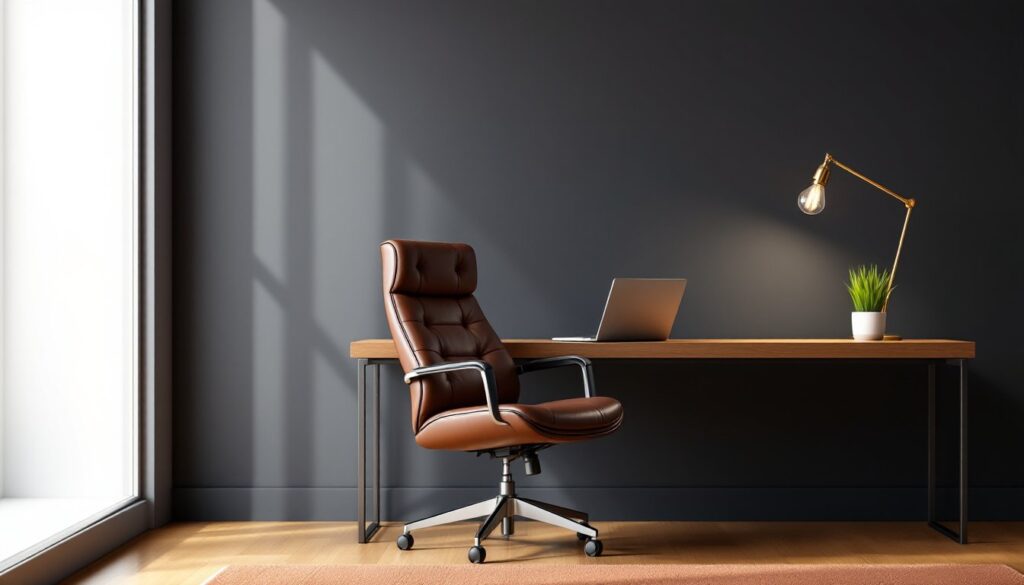
Wood furniture is the obvious pairing. A walnut or oak desk next to a brown leather office chair creates a cohesive, slightly traditional look. If the chair leans dark espresso, match it with similar wood tones to avoid a mismatched vibe. Lighter tan or cognac leather works well with blonde woods like maple or birch for a Scandinavian-leaning aesthetic. You can find inspiration for pairing furniture styles at interior design hubs that showcase various office setups.
Metal desks, particularly matte black powder-coated frames, create contrast without clashing. The industrial edge of steel or aluminum balances leather’s classic feel, especially if you’re mixing modern and vintage elements. Glass-top desks work too, as long as the base isn’t chrome: brushed nickel or gunmetal ties in better with brown tones.
Wall color affects how the chair reads in the space. Greige, navy, or charcoal walls make brown leather pop: white or cream keeps things light and airy but can wash out darker chairs. If you’re painting, test samples next to the chair before committing to five gallons. A poorly matched wall color turns a $500 chair into a design mistake.
Accessories and lighting pull it together. Brass or bronze desk lamps echo the warm undertones in brown leather: chrome and nickel lean too cool. Area rugs in rust, olive, or burnt orange tie into leather’s earthy palette without being matchy. If you’re building custom shelving or a desk, free project plans offer designs that complement executive office furniture without requiring advanced carpentry skills.
Keep the space functional. A leather chair signals a serious workspace, so clutter undermines that. Built-in cable management, wall-mounted organizers, and closed storage maintain the clean lines that make the chair stand out.
Maintenance Tips to Keep Your Chair Looking New
Leather office chairs don’t need daily fussing, but a little routine care prevents damage that’s expensive or impossible to fix.
Dust and vacuum weekly. Use a soft brush attachment on your vacuum to pull dirt out of seams and tufting. Grit left sitting on the surface acts like sandpaper every time you shift in the seat, wearing down the finish faster. A microfiber cloth works for quick wipe-downs between deeper cleans.
Condition the leather every 6–12 months, depending on humidity and use. Leather conditioner (not furniture polish) keeps the hide supple and prevents drying and cracking. Apply a small amount to a clean cloth, rub it in with circular motions, then buff off any excess. Don’t oversaturate, too much conditioner clogs pores and leaves a sticky residue. For full-grain and top-grain leather, a pH-balanced product designed for furniture works best. Avoid mink oil or saddle soap unless the manufacturer specifically recommends it.
Address spills immediately. Blot, don’t wipe, liquid with a clean, dry cloth. Rubbing spreads the stain and pushes it deeper into the leather. For greasy stains, sprinkle cornstarch or baking soda on the spot, let it sit for a few hours to absorb the oil, then brush it off. Ink and dye stains often require a professional: home remedies usually make them worse.
Control your environment. Leather hates extreme temperatures and humidity swings. Keep the chair out of direct sunlight, UV rays fade and dry the material. If your home office gets hot in summer, a dehumidifier prevents the leather from getting tacky. In winter, a humidifier stops it from cracking. Aim for 40–55% relative humidity if you can.
Tighten bolts and screws twice a year. Leather chairs with tufted backs or armrest attachments can develop squeaks or wobbles as hardware loosens. A hex key set or screwdriver takes five minutes to snug everything back up. Check the gas cylinder and base connection especially, those take the most stress.
Rotate the seat cushion if it’s removable. Some chairs let you flip or rotate the seat to distribute wear evenly. This prevents one side from developing a permanent sag while the other looks new.
If you’ve got pets, trim their nails regularly. Cat claws and leather are natural enemies. Dog fur embeds in seams and tufting, vacuum frequently and consider a throw blanket if the dog claims the chair when you’re not around. Leather holds up better than fabric against pet damage, but it’s not indestructible.
Conclusion
Choosing a brown leather office chair comes down to matching quality materials with features that support how you actually work. Focus on the frame, the adjustability, and the hide grade before worrying about style details. A well-built chair with proper lumbar support and durable leather will outlast trendy designs and cheaper alternatives by years. Maintain it with simple, consistent care, dusting, conditioning, and addressing spills quickly, and it’ll look better a decade from now than most furniture does after one.