Table of Contents
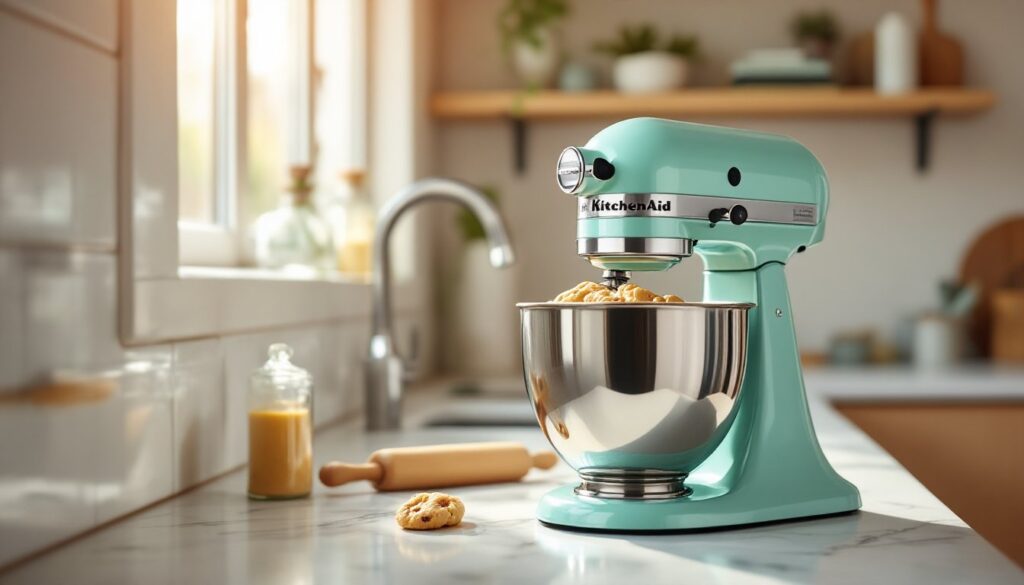
ToggleIf you’re working with limited counter space but refuse to compromise on baking quality, the KitchenAid Mini Mixer might be exactly what your kitchen needs. This scaled-down version of the iconic stand mixer packs serious capability into a footprint that won’t dominate your countertop. It’s not just a cute version of the full-size model, it’s a purposefully engineered tool for smaller batches, tighter spaces, and home bakers who don’t need industrial capacity. Whether you’re a first-time mixer buyer or downsizing from a larger model, understanding what this compact machine can (and can’t) do will help you decide if it’s the right fit for your kitchen.
Key Takeaways
- The KitchenAid Mini Mixer features a 3.5-quart capacity and 250-watt motor, making it ideal for small-batch baking, apartment dwellers, and home bakers who value space efficiency over industrial capacity.
- This compact mixer excels with everyday recipes like single-layer cakes, cookies (up to 5 dozen per batch), and light bread doughs, but struggles with dense doughs like bagels or large-volume holiday baking.
- With the same power hub as full-size KitchenAid models, the Mini Mixer remains compatible with the entire attachment lineup, turning it into a versatile prep station beyond basic mixing.
- At roughly 14 pounds and fitting under standard 18-inch upper cabinets, the KitchenAid Mini Mixer is significantly lighter and more portable than full-size models, making it easier to store and access in smaller kitchens.
- The Mini Mixer costs $50–$80 less than the Classic series while delivering die-cast metal construction and KitchenAid quality, making it a budget-friendly entry point for stand mixer users.
- Regular maintenance like checking beater clearance, hand-washing attachments, and avoiding overloading the motor will extend the lifespan of your compact mixer for years of reliable use.
What Is the KitchenAid Mini Mixer and Who Is It For?
The KitchenAid Artisan Mini (often called the small KitchenAid mixer or mini KitchenAid mixer) is a 3.5-quart stand mixer that measures roughly 20% smaller and 25% lighter than the classic 5-quart tilt-head model. It weighs about 14 pounds compared to the standard model’s 20+ pounds, making it easier to move in and out of cabinets or shift around the counter.
This small kitchen aid stand mixer is ideal for:
- Singles and couples who bake in smaller batches and don’t need to mix dough for three dozen cookies at once
- Apartment dwellers or condo owners with galley kitchens or minimal counter space
- Empty nesters downsizing kitchen tools after kids move out
- Beginner bakers who want a quality mixer without the investment or intimidation factor of a larger machine
- Secondary mixer users who keep a full-size model for big projects but want something lighter for everyday tasks
It’s not the best choice if you regularly bake for large gatherings, make multiple loaves of bread weekly, or knead stiff doughs like bagels or pretzels. For those tasks, the 5-quart or larger bowl capacity and beefier motor of standard models make more sense.
Key Features That Make the Mini Mixer Stand Out
Even though its smaller footprint, the Mini Mixer retains the core engineering that made KitchenAid stand mixers a kitchen staple.
Motor and Power
The Mini runs on a 250-watt motor (compared to 325 watts in the Classic series). That’s adequate for most home baking, cookies, cakes, muffins, and lighter bread doughs. The 10-speed slide control gives you precision from a slow stir (speed 1) up to a fast whip (speed 10), with enough range to handle delicate meringues or thick cookie dough.
Bowl Capacity and Attachments
The 3.5-quart stainless steel bowl is the sweet spot for small-batch baking. You can comfortably mix:
- Up to 5 dozen cookies per batch
- A single 9-inch layer cake or small bundt
- 1 to 1.5 pounds of bread dough
It comes with three standard attachments:
- Flat beater (for general mixing)
- Dough hook (for kneading)
- Wire whip (for aerating)
All attachments are dishwasher-safe, and the tilt-head design makes swapping them out quick and easy.
Hub and Compatibility
The Mini includes the same power hub as full-size models, so it’s compatible with KitchenAid’s entire lineup of attachments, pasta rollers, food grinders, spiralizers, and more. That turns a small mixer into a versatile prep station. Just keep in mind that some of the heavier attachments (like the grain mill) may be overkill for a machine this size.
Footprint and Storage
At roughly 7.75 inches wide, 12 inches deep, and 12 inches tall, the Mini fits under most standard upper cabinets (18 inches clearance) without needing to be moved. If you store it in a cabinet, the lighter weight makes it much easier to lift in and out than a 20-pound mixer.
Pros and Cons: Is the Compact Size Worth It?
Pros
- Space-efficient: Takes up about 20% less counter or cabinet space than the 5-quart tilt-head model
- Lighter and more portable: Easier to move, especially for users with limited strength or mobility
- Quieter operation: The smaller motor runs noticeably quieter than larger models at equivalent speeds
- Lower price point: Typically $50–$80 less than the Classic series, making it a budget-friendly entry into stand mixers
- Same build quality: Die-cast metal construction, not plastic. It’s built to last, just like its bigger siblings
Cons
- Smaller bowl limits batch size: If you regularly double recipes or bake for crowds, you’ll find the 3.5-quart capacity restrictive
- Less powerful motor: Struggles with very dense doughs (bagels, thick pizza dough, or recipes calling for more than 3 cups of flour). The motor can strain or overheat if pushed too hard
- Bowl splatter: The smaller, more rounded bowl design can cause ingredients to climb the sides or splash out at higher speeds, especially with thin batters
- Not ideal for small quantities: Mixing a single egg white or very small amounts can be tricky, the whip or beater may not reach ingredients at the bottom of the bowl effectively
Many appliance testing labs have noted that while the Mini performs well within its intended range, pushing it beyond recommended capacities can shorten motor life or trigger thermal cutoffs.
How the Mini Mixer Compares to Full-Size KitchenAid Models
Here’s how the Mini stacks up against the two most popular full-size models:
| Feature | Mini (3.5-qt) | Classic (4.5-qt) | Artisan (5-qt) |
|---|---|---|---|
| Motor | 250 watts | 275 watts | 325 watts |
| Weight | ~14 lbs | ~20 lbs | ~22 lbs |
| Max Flour Capacity | ~5 cups | ~8 cups | ~9 cups |
| Bread Dough (lbs) | 1–1.5 | 2 | 2–2.5 |
| Cookie Batch | ~5 dozen | ~7 dozen | ~9 dozen |
| Price Range (2026) | $280–$330 | $330–$380 | $400–$480 |
If your typical batch is a single layer cake, a couple dozen cookies, or a loaf of sandwich bread, the Mini handles it without issue. But if you often scale recipes up, entertain frequently, or bake multiple items back-to-back, the Classic or Artisan models offer better capacity and motor headroom without a huge jump in price.
One advantage the Mini does have: because it’s lighter and more maneuverable, users in small kitchen setups report it’s easier to keep on the counter full-time, which increases how often they actually use it.
Best Uses and Recipes for Your KitchenAid Mini
The small KitchenAid mixer thrives with recipes that don’t push its limits. Here’s where it shines:
Ideal Recipes
- Single-layer cakes and cupcakes: Standard 9-inch rounds or up to 18 cupcakes
- Cookies: Chocolate chip, sugar cookies, shortbread, anything calling for 2.5 cups of flour or less
- Muffins and quick breads: Banana bread, blueberry muffins, cornbread
- Whipped cream and meringues: The wire whip handles aeration beautifully at lower volumes
- Light bread doughs: Dinner rolls, focaccia, softer sandwich loaves (avoid stiff bagel or pretzel doughs)
- Mashed potatoes: The flat beater does a clean, lump-free job on 3–4 large russets
Recipes to Avoid or Modify
- Dense, high-hydration doughs: Bagels, thick pizza dough, or recipes requiring extended kneading at high resistance
- Large-batch holiday baking: Triple-batch cookies or multiple pie crusts will require working in smaller portions
- Very small quantities: Beating a single egg white is tough, consider using a handheld mixer or whisk for tasks under 1 cup volume
Many home bakers find the Mini perfect for weeknight desserts and everyday baking, with the understanding that holiday prep or party-sized batches may need to be split into multiple runs.
Storage and Maintenance Tips for Small Kitchens
Getting the most out of a compact mixer means treating it right and storing it smartly.
Storage Solutions
- Under-cabinet placement: The Mini fits under 18-inch upper cabinets, so you can leave it on the counter in most kitchens. Use a non-slip mat or rubberized shelf liner underneath to prevent walking during heavy mixing.
- Pull-out shelf or appliance garage: If cabinet storage is your only option, install a sturdy pull-out shelf rated for at least 20 pounds. This eliminates lifting and makes access easier.
- Corner counters: The smaller footprint works well in corner spaces that are awkward for larger appliances.
Cleaning and Maintenance
- After each use: Wipe down the motor housing with a damp cloth. Avoid getting water in the speed control slot or near the motor vents.
- Bowl and attachments: Dishwasher-safe, but hand-washing extends their life and prevents discoloration. Use warm, soapy water and a non-abrasive sponge.
- Beater clearance check: Every few months, check that the flat beater isn’t scraping the bowl. Adjust the beater-to-bowl clearance using the screw on the motor head (consult your manual, it’s a quick turn with a flat-head screwdriver).
- Lubrication: The gearbox is factory-sealed and doesn’t need regular oiling, but if you notice grinding or unusual noise after a few years of heavy use, contact KitchenAid service. Attempting DIY gearbox work can void the warranty.
Safety Notes
- Never run the mixer empty or at high speed with no load, it can overheat the motor.
- Don’t exceed rated capacity. If the motor smells hot or the unit shuts off mid-mix, you’ve overloaded it. Let it cool for 30 minutes before restarting.
- Always unplug before attaching or removing tools or reaching into the bowl.
For more home appliance care strategies, regular maintenance logs and seasonal deep-cleans help extend the lifespan of all countertop tools, not just mixers.
Conclusion
The KitchenAid Mini Mixer is a legitimate workhorse for small-batch bakers and space-conscious kitchens. It won’t replace a 6-quart bowl-lift model for serious bread bakers or large-family cooks, but for singles, couples, and everyday baking tasks, it delivers KitchenAid quality without the bulk. If your recipes rarely exceed five cups of flour and your counter or cabinet space is at a premium, the Mini is a smart, capable choice that’ll handle years of regular use.