Table of Contents
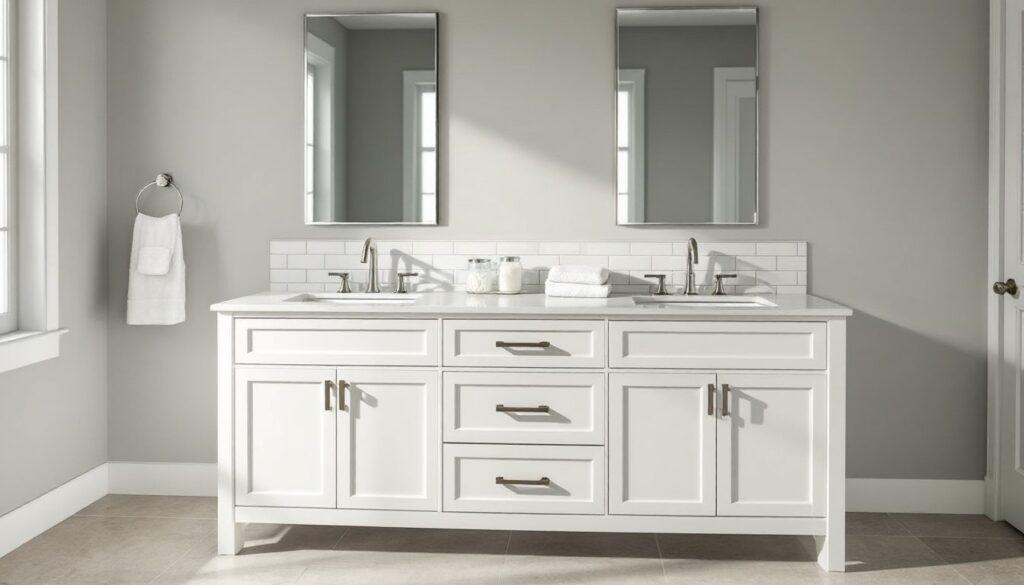
ToggleA 72 inch bathroom vanity isn’t just furniture, it’s the command center of a master bath. With enough counter space for two sinks, morning routines become less territorial, and storage stops being a negotiation. But choosing one involves more than picking a style you like on Pinterest. You’ll need to understand weight loads, plumbing configurations, clearance requirements, and whether your floor joists can handle 400+ pounds of vanity, countertop, and stone. This guide walks through the practical decisions that separate a successful install from an expensive mistake.
Key Takeaways
- A 72 inch bathroom vanity provides dual sinks and substantial storage capacity, eliminating morning bottlenecks while fitting efficiently into most master baths measuring 12–15 feet long.
- Proper installation requires at least 84 inches of clear wall space per IRC code, and you must account for weight loads of 300–500 pounds, which may require floor reinforcement in older homes.
- A 72 inch bathroom vanity ranges from $800 to $7,000+ depending on materials and construction, with professional installation adding $400–$1,200; budget an additional 15–20% for unexpected costs like plumbing rework or subfloor damage.
- Modern floating designs require solid wall backing (2×8 or 2×10 lumber), while traditional styles pair well with granite or marble countertops that add significant weight and require proper sealing.
- Plumbing rough-in must account for drain lines at 18 inches AFF and supply lines at 21 inches AFF, with sink centerlines spaced 30–36 inches apart to accommodate P-traps without interference.
- Quality construction and proper ventilation allow a 72 inch vanity to last 10–20 years, with mid-range and premium options significantly outlasting budget tiers in humid bathroom environments.
Why Choose a 72 Inch Bathroom Vanity?
A 72 inch vanity solves the double-sink problem without wasting square footage. Most master baths measure 12–15 feet long, and a six-footer fits that footprint while leaving room for a shower or tub on the opposite wall.
Dual sinks eliminate the morning bottleneck. Two people can brush teeth, wash faces, and get ready simultaneously without elbowing each other for faucet access. That’s not lifestyle fluff, it’s spatial efficiency.
Storage capacity jumps significantly at this length. Expect four to six drawers, plus cabinet space below. That’s room for towels, toiletries, hair tools, and cleaning supplies without countertop clutter. Compare that to a 48 inch single-sink model, which typically maxes out at two drawers and cramped cabinet space.
Resale value matters if you’re planning to sell within a decade. Buyers expect double sinks in master baths, especially in homes over 2,000 square feet. A quality 72 inch vanity checks that box and can return 60–70% of its cost at resale, according to home renovation cost guides that track fixture upgrades.
The tradeoff? You’ll need at least 84 inches of clear wall space to meet code-compliant clearances (more on that below). And you’re looking at 300–500 pounds of total weight once the countertop is mounted, so floor structure matters.
Top Styles and Materials for 72 Inch Vanities
Modern and Contemporary Designs
Modern vanities lean on clean lines, floating mounts, and flat-panel doors. Materials include engineered wood with high-gloss lacquer, plywood with melamine coating, or MDF (medium-density fiberboard) wrapped in thermofoil. Thermofoil resists moisture better than raw MDF but can peel if exposed to steam over time.
Floating (wall-mounted) vanities are popular in contemporary builds. They create visual space and simplify floor cleaning, but require solid blocking between studs, typically 2×8 or 2×10 lumber screwed into at least two studs. Without proper backing, drywall anchors won’t support the load. Expect to open the wall during install if blocking isn’t already in place.
Integrated sinks molded into synthetic countertops (cultured marble, quartz composite) deliver seamless looks and eliminate the grout line where sink meets counter. The downside: if the sink cracks, you’re replacing the entire top.
Hardware tends toward minimal, flat bar pulls in matte black, brushed nickel, or chrome. Soft-close drawer glides are standard in mid-range and up: anything under $1,200 might use roller glides that slam.
Traditional and Transitional Options
Traditional vanities feature raised-panel doors, decorative molding, and furniture-style legs. Solid wood construction, oak, maple, cherry, or birch, is common, though many mix solid-wood frames with plywood panels to reduce weight and cost. Oak remains a go-to for durability and grain character, as seen in collections from curated home product guides that focus on timeless material choices.
Marble and granite countertops pair naturally with traditional cabinetry. Marble is softer (Mohs 3–4) and stains easily without sealing: granite is harder (Mohs 6–7) and more forgiving. Both add significant weight, 12–15 pounds per square foot for 3cm slabs. A 72 inch top can weigh 180+ pounds before sinks are mounted.
Transitional styles split the difference: Shaker-style doors (flat panel with simple frame), neutral finishes (gray, taupe, soft white), and understated hardware. They’re safe bets if you’re unsure whether your taste skews modern or traditional. These vanities often use birch plywood boxes with solid poplar or maple face frames, strong, cost-effective, and moisture-resistant when sealed properly.
Undermount sinks are typical in traditional setups. They require a waterproof countertop material (stone, solid surface, or quartz) and careful sealing where the rim meets the underside of the counter.
Installation Considerations and Space Requirements
Minimum room width: You need 84 inches of clear, unobstructed wall to install a 72 inch vanity and meet IRC code for fixture clearance. The International Residential Code (IRC Section R307.1) requires at least 6 inches of clearance from the vanity edge to any sidewall or obstruction. Measure stud-face to stud-face if you’re planning a recessed install.
Centerline spacing for sinks: Plumbing codes don’t mandate exact spacing, but 30–36 inches between drain centerlines is standard for comfort and code compliance with lav (lavatory) fixture clearances. Too close, and you’ll struggle to fit P-traps without interference. Too far apart, and you waste usable counter space.
Plumbing rough-in: Drain lines are typically 18 inches above the finished floor (AFF), measured to the centerline of the trap arm. Supply lines (hot and cold) sit at 21 inches AFF, spaced 8 inches apart for a widespread faucet, or centered for a single-hole model. If your existing rough-in doesn’t align with the new vanity’s sink locations, you’ll need to reroute, that’s a job for a licensed plumber unless you’re comfortable sweating copper or working with PEX.
Weight and floor load: A loaded 72 inch vanity (cabinet + stone top + sinks + stored items) can exceed 500 pounds. Standard floor joists, 2x10s at 16 inches on center, handle this fine, but older homes with undersized or sagging joists may need reinforcement. If you’re installing on a second floor over a living space, confirm joist span and condition before delivery.
Electrical and GFCI protection: The National Electrical Code (NEC 210.8) requires GFCI protection for all bathroom receptacles. If you’re adding outlets for hair dryers or electric toothbrushes, they must be GFCI-protected and at least 12 inches above the countertop. Don’t assume existing outlets are compliant, test them or hire an electrician.
Leveling and shimming: Few bathroom floors are perfectly flat. Bring a 4-foot level and composite shims. Freestanding vanities need leveling front-to-back and side-to-side before securing to studs. Floating vanities require level blocking: even a 1/4-inch slope becomes visible over six feet.
Permits: Cosmetic vanity replacement rarely requires a permit, but if you’re moving plumbing, adding circuits, or altering walls, check with your local building department. Some jurisdictions require permits for any plumbing work, even fixture swaps.
Budgeting for Your 72 Inch Vanity: What to Expect
Pricing breaks into tiers based on materials, construction, and features. All prices reflect typical 2026 market rates and vary by region and retailer.
Budget tier ($800–$1,500): Expect engineered wood (MDF or particleboard) with melamine or veneer, cultured marble integrated tops, and basic hardware. Drawer glides are often roller-style (not soft-close). These vanities work for flips, rentals, or short-term use but may show wear within 5–7 years in a humid bathroom. Many oak-finished 72-inch bathroom vanities in this range balance affordability with classic styling.
Mid-range ($1,500–$3,500): Plywood construction, solid-wood doors, soft-close drawers, and dovetail joinery. Countertop options expand: engineered quartz, granite, or solid wood. Finishes are factory-applied (catalyzed lacquer or conversion varnish) for durability. Undermount ceramic sinks are common. These vanities hold up 10–15 years with proper ventilation and sealing.
Premium ($3,500–$7,000+): Solid hardwood frames, full-extension soft-close glides, concealed hinges, and premium stone or quartz tops with decorative edges (ogee, bevel, waterfall). Some include features like built-in electrical outlets, LED lighting, or custom sizing. Construction quality is furniture-grade, and finishes resist moisture and yellowing. Expect 15–20+ year lifespans.
Installation costs: DIY installation saves $300–$800 in labor but requires confidence with plumbing, leveling, and securing heavy cabinets. Professional install typically runs $400–$1,200, depending on complexity (floating vs. freestanding, new plumbing rough-in, countertop fabrication). Quartz or granite countertop templating and installation alone add $800–$1,500 if not included.
Don’t forget ancillary costs:
- Faucets (x2): $100–$600 per faucet, depending on finish and brand.
- P-traps and supply lines: $40–$80 for both sinks.
- Backsplash materials: $3–$15 per square foot (tile, stone, or prefab panels).
- Demolition and disposal: $100–$300 if a contractor handles old vanity removal.
Budget an additional 15–20% cushion for surprises, rotted subfloor, out-of-plumb walls, or incompatible plumbing that needs rework.
Conclusion
A 72 inch vanity is a significant investment in function and finish, but only if you match the style, materials, and construction to your space and skill level. Measure twice, account for plumbing and structural realities, and budget for the whole project, not just the cabinet. Done right, a double-sink vanity makes a master bath work the way it’s supposed to.